
 Peidayesh | پیدایش
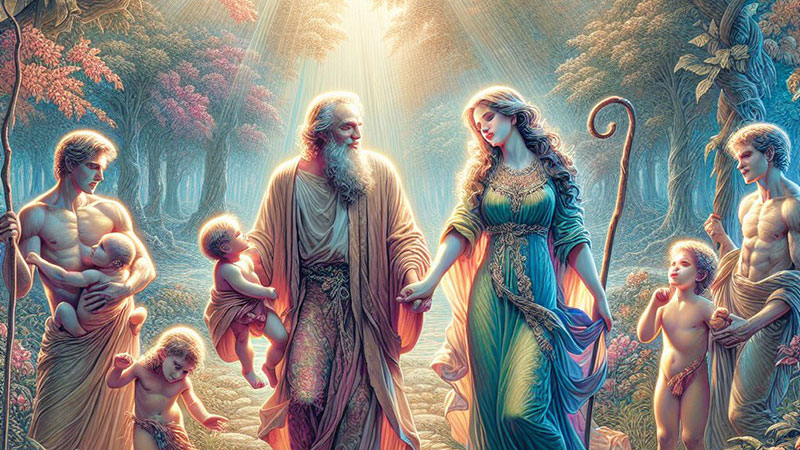
Human history begins with a family, not just a creation. Their internal struggles still mirror the complexities of the human soul today. In Genesis, we see a profound shift from Eden to earthly life. Upon Cain’s birth, Eve declares she produced a man with the Lord’s help.
This initial spark of hope soon turned into a turbulent saga. A tragic rivalry grew between Cain, the farmer, and Abel, the shepherd. Eventually, Abel’s blood cried out from the ground. God then granted the birth of Seth to replace Abel. Seth carried the flame of their lineage toward Noah.
By exploring these three brothers, we uncover a foundational narrative. Their lives reveal deep themes of jealousy and righteousness. This story of redemption continues to define the human experience today.
The Birth of Cain, Abel, and Seth
The Firstborn, the firstborn son of Adam and Eve, holds a unique place in biblical history. His birth marks the beginning of the human lineage after the fall from grace.
Cain: The Firstborn
- Cain became a farmer, cultivating the land and producing crops.
- As the first human born, he represents humanity’s potential to shape the world.
- Cain’s offering to God, which was not accepted, ignited his feelings of jealousy and resentment toward his brother, Abel.
Important Note: Cain’s story serves as a powerful reminder of how unchecked emotions can lead to devastating consequences.
Abel: The Second Son
Abel, the second son, contrasts sharply with Cain in both his role and the nature of his offerings.
- Abel was a shepherd, responsible for tending to flocks.
- His sacrifice, a lamb from his flock, was accepted by God, symbolizing the value of sincere devotion and righteousness.
- Abel’s life was cut short by Cain’s jealousy, marking one of the earliest acts of violence in human history.
Abel’s story underscores themes of innocence and the tragic consequences of envy, reminding us of the fragility of life.
Seth: The Replacement for Abel
After the tragic death of Abel, Seth emerged as a pivotal figure in the continuation of Adam and Eve’s lineage.
- Seth was born as a direct response to the loss of Abel, representing hope and renewal.
- He is considered the ancestor of Noah and, thus, all of humanity after the Great Flood.
- Seth’s lineage is associated with righteousness and the worship of God, in contrast to Cain’s descent, which led to further moral decline.
Conclusion: Seth’s birth illustrates the biblical theme of restoration after loss, showing that even in the face of tragedy, new beginnings are possible.
These three brothers, Cain, Abel, and Seth, each represent distinct aspects of the human experience, from ambition and conflict to hope and legacy. Their stories continue to resonate, providing valuable lessons for readers today.

The Story of Cain and Abel
The story of Cain and Abel, found in Genesis 4, serves as the foundational narrative of human sibling rivalry and the moral weight of our intentions. As the first children of Adam and Eve, they established two distinct paths of labor: Cain as a “tiller of the ground” and Abel as a “keeper of sheep” (Genesis 4:2). The conflict reached a breaking point when they brought their offerings to the Lord.
While Cain brought a generic “offering of the fruit of the ground,” Abel brought the “firstlings of his flock and of the fat thereof” (Genesis 4:3-4). The Bible notes that “the Lord had respect unto Abel and to his offering: But unto Cain and to his offering he had not respect” (Genesis 4:4-5), suggesting that Abel’s sacrifice was rooted in a deeper faith and sincerity that Cain lacked.
Consumed by “countenance fallen” and a burning resentment, Cain ignored God’s gentle warning that “sin lieth at the door” (Genesis 4:7). Driven by unchecked jealousy, Cain lured his brother into a field and committed the first act of homicide.
When God questioned Abel’s whereabouts, Cain’s defiant response, “Am I my brother’s keeper?” (Genesis 4:9), became a haunting testament to his rejection of moral responsibility. Consequently, Cain was cursed from the earth and marked as a “fugitive and a vagabond,” illustrating the devastating ripple effects of envy and the high cost of a heart turned away from divine counsel.
The Curse of Cain
The account of the first fratricide begins in Genesis 4:8-12, where Cain’s jealousy toward Abel culminates in murder. When God confronts him, Cain infamously asks, “Am I my brother’s keeper?” revealing a cold evasion of responsibility. In response, God declares a curse that fundamentally alters Cain’s relationship with the earth:
“Now you are under a curse and driven from the ground, which opened its mouth to receive your brother’s blood from your hand” (Gen 4:11). This judgment meant that the soil would no longer yield its strength to him, effectively stripping the farmer of his livelihood and sentencing him to a life as a “restless wanderer on the earth” (Gen 4:12).
Exile, Mercy, and the Protective Mark
Facing the weight of his sentence, Cain despairs, fearing that his exile from God’s presence will lead to his own death at the hands of others. However, the narrative shifts from pure judgment to a complex display of divine mercy.
As recorded in Genesis 4:15, the Lord declares, “Not so; anyone who kills Cain will suffer vengeance seven times over.” To ensure this protection, God placed a specific mark on Cain, not as a brand of shame alone, but as a deterrent against further violence. Cain then departed from the Lord’s presence to dwell in the Land of Nod, east of Eden, carrying a legacy that serves as a permanent biblical symbol of the tension between human transgression and God’s sovereign protection.
The Legacy of Cain
The story of Cain does not end with his exile. His descendants and the city he founded play a significant role in understanding the broader narrative of humanity’s early days. This section explores the lineage and legacy of Cain, shedding light on his contributions and their lasting impact.
Cain’s Descendants
Enoch:
Cain’s firstborn son, Enoch, carries the weight of his father’s legacy. The name Enoch is often associated with wisdom and initiation, hinting at a lineage that would bring forth new ideas and advancements.
Lamech:
- The Innovator: A notable descendant, Lamech, is often credited with significant contributions to early human civilization. He had two wives, Adah and Zillah, and fathered children who would become pioneers in their respective fields.
- Jabal: Considered the father of those who dwell in tents and have livestock, Jabal is credited with advancements in pastoral life and animal husbandry.
- Jubal: Known as the father of all who play the harp and flute, Jubal’s legacy lies in the arts, particularly music, indicating a flourishing of cultural development.
- Tubal-Cain: A master in forging tools from bronze and iron, Tubal-Cain represents the birth of metallurgy and craftsmanship, which were pivotal to technological progress.
The City of Enoch
- Founding the City:
- Legacy of Settlement: After Cain was banished to wander, he settled in the land of Nod, east of Eden, and founded a city named after his son, Enoch. This act of founding a city symbolizes a significant shift from nomadic life to settled communities.
- Symbol of Humanity’s Progress: The city of Enoch represents the early human efforts to create organized societies, complete with structures and systems that would lay the groundwork for future civilizations.
- Cultural and Technological Hub:
- Advancements in Society: As the city flourished, it became a hub of innovation and cultural development. The advancements brought by Cain’s descendants in agriculture, music, and metallurgy indicate a burgeoning civilization.
- Legacy of Innovation: The city of Enoch serves as a testament to early human ingenuity and the capacity to build and improve upon the world, despite the burdens of past transgressions.
- Moral Complexity:
- Dual Legacy: Cain’s legacy is dual-faceted, on one hand, marked by the curse and his fratricide, and on the other, by the significant contributions his lineage made to human progress. This complexity adds depth to the narrative, illustrating the intertwined nature of sin and redemption.
By exploring Cain’s descendants and the city of Enoch, we gain a deeper understanding of the intricate legacy left behind by one of the earliest figures in human history. This legacy is a blend of innovation, cultural development, and moral complexity, reflecting the multifaceted nature of human progress.
The Birth and Role of Seth
Seth, the third son of Adam and Eve, holds a crucial place in biblical history. His birth and lineage play a significant role in the continuation of humanity after the tragedy of Abel’s death. This section explores Seth’s birth, his role as the ancestor of Noah, and the significance of his lineage.

Seth’s Birth After Abel’s Death
- A New Beginning:
- Eve’s Hope: After the death of Abel at the hands of Cain, Adam and Eve were granted another son, Seth. Eve named him Seth, meaning “appointed” or “granted,” as she believed he was given by God to replace Abel.
- Restoration: Seth’s birth represents a new beginning and a restoration of hope for humanity. His arrival marked the continuation of Adam’s lineage on a righteous path.
Seth is the Ancestor of Noah
- The Line of Righteousness:
- Genealogy: Seth’s lineage is recorded in the Bible as a line of righteousness, distinct from Cain’s line. This genealogy includes notable figures who were faithful to God.
- Enoch: One of Seth’s descendants, Enoch, was known for his closeness with God. It is said that “Enoch walked with God; then he was no more, because God took him away,” signifying Enoch’s righteousness and unique relationship with the divine.
- Methuselah: Another descendant, Methuselah, is famously known as the longest living human, living 969 years. His long life is often seen as a testament to the righteousness of Seth’s lineage.
- Noah:
- Pivotal Figure: Seth’s most prominent descendant is Noah. Noah’s faithfulness and obedience to God led to him being chosen to build the Ark, saving humanity and animal life from the Great Flood.
- Legacy of Faith: Through Noah, the lineage of Seth continued, ensuring the preservation and continuation of humanity. Noah’s sons, Shem, Ham, and Japheth, repopulated the earth, carrying forward the legacy of righteousness.
Seth’s Lineage
- A Legacy of Faithfulness:
- Generational Impact: Seth’s descendants are often highlighted for their faith and obedience to God, contrasting with the line of Cain, which is marked by violence and rebellion.
- Cultural Influence: The narrative of Seth’s lineage has influenced various cultural and religious traditions, emphasizing the importance of faithfulness and righteousness.
- Theological Significance:
- Messianic Lineage: Seth’s line is traditionally considered to lead to the birth of Jesus Christ, making it significant in Christian theology. This lineage underscores the themes of redemption and the fulfillment of God’s promises.
- Symbol of Hope: Seth’s story symbolizes hope and renewal, illustrating that despite humanity’s failings, there is always a path to restoration and divine favor through faith and righteousness.
By understanding the birth and role of Seth, we gain insight into the foundational aspects of human history and the theological significance of his lineage. Seth’s story is a testament to the enduring themes of hope, faith, and divine providence that continue to resonate through generations.

The Genealogy of Adam Through Seth
The genealogy of Adam through Seth traces a lineage of notable figures whose faith and actions significantly impacted early human history. This section outlines the line from Seth to Noah and highlights key figures in Seth’s lineage.
Read More: Cain and Abel: A Tale of Jealousy and Tragedy
The Line from Seth to Noah
- Adam:
- Creation: As the first human created by God, Adam’s lineage sets the foundation for humanity.
- Father of Seth: After the death of Abel, Adam and Eve had another son, Seth, who carried forward the righteous lineage.
- Seth:
- Hope Restored: Seth’s birth brought hope and continuation of Adam’s lineage, establishing a line known for its faithfulness to God.
- Ancestor of Notables: His descendants include several key figures who played significant roles in biblical history.
- Enosh:
- Legacy of Worship: Enosh, the son of Seth, is noted for his time when people began to call upon the name of the Lord, indicating a renewed dedication to worship.
- Kenan:
- Faithfulness: As part of Seth’s line, Kenan continued the tradition of righteousness and adherence to God’s will.
- Mahalalel:
- Generational Impact: Mahalalel’s life signifies the ongoing legacy of faith passed down through generations.
- Jared:
- Father of Enoch: Jared is best known for being the father of Enoch, a pivotal figure in Seth’s lineage.
- Enoch:
- Walking with God: Enoch’s unique relationship with God is highlighted by the fact that “Enoch walked with God; then he was no more because God took him away.”
- Symbol of Righteousness: Enoch’s life represents the ideal of faithful living and direct communion with the divine.
- Methuselah:
- Longevity: Methuselah, the son of Enoch, lived 969 years, making him the longest-living human in the Bible. His long life is often seen as a testament to God’s blessings.
- Lamech:
- Father of Noah: Lamech is notable for being the father of Noah, who would play a crucial role in the survival and continuation of humanity.
- Noah:
- Preserver of Life: Noah’s faith and obedience led him to build the Ark, saving his family and animal life from the Great Flood, thereby ensuring the continuation of Seth’s righteous lineage.

Key Figures in Seth’s Lineage
- Enoch:
- Remarkable Piety: Enoch’s life stands out for his close relationship with God. He lived 365 years, and his assumption into heaven without death signifies his exceptional faith.
- Methuselah:
- Longest Life: Methuselah’s extraordinary lifespan of 969 years underscores the blessings and favor within Seth’s line.
- Noah:
- Covenant with God: Noah’s righteousness and obedience earned him God’s favor. He built the Ark, preserving human and animal life through the Flood. The covenant God made with Noah established a new beginning for humanity.
- Shem, Ham, and Japheth:
- Repopulating the Earth: Noah’s sons played a vital role in repopulating the Earth after the Flood. Each of their descendants spread across different regions, establishing the foundations of various nations and cultures.
By tracing the genealogy of Adam through Seth, we see a lineage marked by faithfulness, righteousness, and divine favor. The line from Seth to Noah highlights the importance of maintaining a close relationship with God and the significant impact that adherence to faith can have on human history.
These key figures not only carried forward Adam’s legacy but also laid the groundwork for future generations, demonstrating the enduring power of faith and obedience.
The Significance of Cain, Abel, and Seth in Theology
The stories of Cain, Abel, and Seth are foundational in theological discussions, offering profound insights into human nature, sin, and redemption. This section delves into the theological interpretations of these figures and the valuable lessons their stories impart.
Theological Interpretations
Cain:
- Symbol of Sin and Punishment: Cain’s act of murdering his brother Abel is often interpreted as the first instance of human sin after the Fall, representing the destructive nature of jealousy and anger.
- Divine Justice and Mercy: God’s punishment of Cain, exile, and the mark of Cain, demonstrates divine justice. However, the mark also signifies God’s mercy, protecting Cain from His transgressions.
- Human Free Will: Cain’s story underscores the concept of free will, illustrating that humans have the power to choose their actions, for better or worse, and must face the consequences.
Abel:
- Righteousness and Sacrifice: Abel is often seen as a symbol of innocence and righteousness. His acceptable sacrifice contrasts with Cain’s, highlighting the importance of sincere and faithful offerings to God.
- Martyrdom: Abel’s unjust death at the hands of his brother makes him one of the first martyrs, his story echoing the theme of the suffering of the innocent throughout theological history.
Seth:
- Line of Redemption: Seth represents hope and restoration, as his lineage is seen as the righteous line that leads to Noah and, ultimately, to Jesus Christ in Christian theology.
- Divine Appointment: Seth’s name, meaning “appointed” or “granted,” signifies his role as the divinely chosen continuation of humanity’s righteous line, reflecting God’s ongoing plans for redemption.

Lessons from Their Stories
Consequences of Sin:
- Moral Accountability: Cain’s story teaches that actions have consequences and that sin can lead to severe repercussions, both for individuals and their communities.
- Importance of Repentance: Despite his grave sin, Cain’s narrative also suggests the possibility of seeking mercy and protection from God, highlighting the importance of repentance.
Faithfulness in Worship:
Sincerity Matters: Abel’s acceptable sacrifice emphasizes that God values the sincerity and purity of one’s heart in worship. This lesson underscores the importance of genuine faith over mere ritual.
Hope and Redemption:
- Restorative Hope: Seth’s birth after the tragedy of Abel’s death symbolizes hope and the possibility of new beginnings, even after great loss and sin.
- Lineage of Righteousness: The continuation of Seth’s line leading to Noah and beyond illustrates the theme of redemption and the enduring nature of God’s plans for humanity.
Human Relationships:
- Brotherhood and Conflict: The story of Cain and Abel highlights the complexities of human relationships, particularly the destructive potential of jealousy and the vital importance of brotherly love and harmony.
- Communal Responsibility: Seth’s lineage and the establishment of his line emphasize the role of family and community in fostering righteousness and faithfulness through generations.
Read More: What is God’s Covenant with Noah?
The narratives of Cain, Abel, and Seth offer rich theological insights and timeless lessons. They challenge us to reflect on the nature of sin, the sincerity of our faith, and the power of hope and redemption. Through these stories, we gain a deeper understanding of the human condition and the divine principles that guide our lives.

The Symbolism of Cain, Abel, and Seth
The stories of Cain, Abel, and Seth are rich with symbolic meaning that resonates through religious texts and modern interpretations. This section explores their symbolism in religious contexts and how these figures are understood and reinterpreted in contemporary thought.
Symbolism in Religious Texts
Cain:
- Symbol of Sin and Consequence: In religious texts, Cain represents the human capacity for sin, specifically the destructive power of envy and anger. His murder of Abel is a cautionary tale about the consequences of letting negative emotions go unchecked.
- Divine Justice and Mercy: Cain’s punishment and the mark placed upon him symbolize God’s justice tempered with mercy, illustrating that even those who sin are not beyond the reach of divine protection and forgiveness.
Abel:
- Symbol of Innocence and Righteousness: Abel’s role as the innocent victim emphasizes the value of righteousness and faithfulness. His acceptable sacrifice highlights the importance of sincerity in worship and devotion to God.
- Martyrdom: Abel is often seen as a precursor to later martyrs, representing the idea that the righteous may suffer unjustly but are ultimately vindicated by God.
Seth:
- Symbol of Hope and Continuation: Seth symbolizes the continuation of humanity and God’s plan for redemption. His birth after Abel’s death represents hope and the restoration of divine favor.
- The lineage of the Faithful: Seth’s descendants are depicted as the righteous line, leading to significant biblical figures like Noah, and eventually, in Christian theology, to Jesus Christ.

Modern Interpretations
Psychological Perspectives:
- Cain and the Shadow Self: In modern psychology, particularly in Jungian analysis, Cain can be seen as a representation of the “shadow self,” the darker aspects of human nature that must be acknowledged and integrated rather than repressed.
- Abel as the Ideal Self: Abel represents the aspirational self, embodying qualities of innocence, righteousness, and acceptance. His story encourages individuals to strive for their highest ideals.
Literary and Cultural Reinterpretations:
- Cain as the Antihero: In literature and film, Cain is often reimagined as a complex antihero, a character who, despite his flaws, seeks redemption and understanding. This reinterpretation explores themes of guilt, punishment, and the search for forgiveness.
- Abel as the Eternal Victim: Abel’s role as a martyr is expanded in modern narratives to comment on themes of injustice, sacrifice, and the moral complexities of victimhood.
- Seth and Legacy: Seth’s story is sometimes used to explore themes of legacy and the impact of one’s actions on future generations. His lineage symbolizes the enduring nature of hope and the possibility of redemption.
Theological Discussions:
- Free Will and Predestination: The stories of Cain, Abel, and Seth continue to fuel debates about free will versus predestination. Cain’s choices versus Abel’s fate and Seth’s role highlight the interplay between human agency and divine plan.
- Moral Lessons: Modern theologians often use these stories to teach moral lessons about jealousy, faith, repentance, and the importance of maintaining a righteous path even in the face of adversity.
By examining the symbolism of Cain, Abel, and Seth, we gain a deeper appreciation for their enduring relevance. Their stories continue to offer valuable insights into human nature, morality, and the complexities of divine justice and mercy, resonating with audiences across different eras and cultural contexts.

The Impact of Cain, Abel, and Seth on Later Biblical Narratives
The stories of Cain, Abel, and Seth set foundational themes that resonate throughout the Bible. This section explores their influence on other biblical narratives and highlights their references in the New Testament.
Influence on Other Biblical Stories
- Themes of Jealousy and Brotherhood:
- Joseph and His Brothers: The jealousy that led Cain to murder Abel is mirrored in the story of Joseph and his brothers. Driven by jealousy, Joseph’s brothers sell him into slavery, illustrating the destructive potential of envy and the need for reconciliation.
- Esau and Jacob: The tension between brothers is also seen in the story of Esau and Jacob, where sibling rivalry leads to conflict and estrangement, echoing the tale of Cain and Abel.
- Justice and Mercy:
- David and Saul: The themes of divine justice and mercy in Cain’s story are reflected in the relationship between David and Saul. Despite Saul’s attempts to kill David out of jealousy, David shows mercy, highlighting the complex interplay of justice and forgiveness.
- Moses and the Exodus: The story of Moses leading the Israelites out of Egypt carries the theme of divine justice against the oppressors (Pharaoh) and mercy for the oppressed (Israelites), paralleling God’s treatment of Cain.
- Lineage and Righteousness:
- Abraham’s Descendants: The emphasis on righteous lineage seen in Seth’s story is continued with Abraham’s descendants, who are chosen to fulfill God’s covenant and bring forth a nation dedicated to righteousness.
- Davidic Line: The lineage of David, leading to the Messiah, reflects the importance of genealogical continuity and divine favor seen in the line of Seth.
References in the New Testament
Cain:
1 John 3:12: “Do not be like Cain, who belonged to the evil one and murdered his brother. And why did he murder him? Because his actions were evil and his brother’s were righteous.” This passage highlights Cain’s actions as a warning against evil deeds and jealousy.
Hebrews 11:4: “By faith, Abel brought God a better offering than Cain did. By faith, he was commended as righteous, when God spoke well of his offerings.” This verse emphasizes Abel’s righteousness and faith, contrasting with Cain’s actions.
Abel:
Matthew 23:35: “And so upon you will come all the righteous blood that has been shed on earth, from the blood of righteous Abel to the blood of Zechariah son of Berekiah, whom you murdered between the temple and the altar.” Jesus refers to Abel as righteous, highlighting his role as the first martyr.
Hebrews 12:24: “To Jesus the mediator of a new covenant, and to the sprinkled blood that speaks a better word than the blood of Abel.” Abel’s blood is seen as a symbol of righteousness and innocence, but Jesus’ sacrifice is portrayed as a greater act of redemption.
Seth:
Luke 3:38: “The son of Enosh, the son of Seth, the son of Adam, the son of God.” This genealogy traces Jesus’ lineage back to Seth, emphasizing the continuation of the righteous line and God’s plan for salvation through Seth’s descendants.
Acts 17:26: “From one man he made all the nations, that they should inhabit the whole earth; and he marked out their appointed times in history and the boundaries of their lands.” This verse indirectly references the importance of Adam’s lineage through Seth in the spread of humanity.
The impact of Cain, Abel, and Seth on later biblical narratives is profound, with their stories laying the groundwork for recurring themes of jealousy, justice, mercy, righteousness, and redemption.
Their legacy is woven into the fabric of the Bible, influencing key stories and teachings. Their presence is felt throughout the New Testament, underscoring their enduring significance in theological thought and interpretation.

The Role of Cain, Abel, and Seth in Different Religions
The stories of Cain, Abel, and Seth are central to many religious traditions. This section explores their roles within Christianity, Islam, and Judaism. By looking at each faith, we can see both their shared themes and its unique perspectives.
Perspectives in Christianity
Cain:
- Symbol of Sin and Redemption: In Christian theology, Cain’s story is often cited as an example of sin’s destructive power. His murder of Abel underscores the consequences of jealousy and disobedience to God.
- Mark of Cain: The mark placed on Cain serves as a symbol of God’s justice and mercy, protecting him even after his sin, and suggesting that no one is beyond redemption.
Abel:
- Righteousness and Sacrifice: Abel is celebrated as a model of righteousness and faithfulness. His acceptable sacrifice represents true devotion and sincerity in worship.
- Martyrdom: Abel is often seen as the first martyr, whose innocent blood cried out to God, symbolizing the suffering of the righteous and their ultimate vindication by God.
Seth:
- Continuation of Righteous Lineage: Seth is significant as the ancestor of Noah and, ultimately, Jesus Christ. His line is viewed as carrying forward the promise of redemption and the fulfillment of God’s plan.
- Hope and Restoration: Seth’s birth is seen as a restoration of hope for humanity after Abel’s death, symbolizing God’s ongoing provision and care.
Views in Islam
- Cain (Qabil):
- First Murder: In Islamic tradition, Qabil (Cain) is known for committing the first murder by killing his brother Habil (Abel). This act is seen as the origin of violence and conflict in human history.
- Lesson in Repentance: Cain’s story in Islam emphasizes the importance of repentance and seeking God’s forgiveness. Despite his grave sin, Cain’s narrative includes themes of remorse and the need for mercy.
- Abel (Habil):
- Piety and Acceptance: Habil is portrayed as a pious and righteous individual whose sacrifice was accepted by God. His story is used to illustrate the importance of sincerity in worship and adherence to divine commands.
- Symbol of Innocence: Abel’s innocence and unjust death serve as a reminder of the trials faced by the righteous and the ultimate justice of God.
- Seth (Sheeth):
- Prophet and Guide: In Islamic tradition, Sheeth (Seth) is considered a prophet who guided humanity after Adam’s death. He is credited with receiving divine revelations and continuing the legacy of monotheism.
- Foundation of Civilization: Seth’s contributions to early human society include advancements in knowledge and the establishment of righteous communities, emphasizing his role in the development of civilization.
Read More: What is God’s Covenant with Abram?
Interpretations in Judaism
- Cain:
- Moral Responsibility: In Judaism, Cain’s story is a profound commentary on moral responsibility and the consequences of one’s actions. His question, “Am I my brother’s keeper?” highlights the ethical duty to care for others.
- Mark of Cain: The mark placed on Cain is interpreted as both a punishment and a form of protection, reflecting God’s complex relationship with justice and mercy.
- Abel:
- Model of Righteousness: Abel is revered as a symbol of righteousness and pure intention. His sacrifice being accepted by God is seen as a testament to his virtuous character.
- Innocent Suffering: Abel’s story is often referenced in discussions about the suffering of the innocent and the need for justice in human relationships.
- Seth:
- Continuity of Righteous Lineage: Seth’s significance in Judaism lies in his role in continuing the righteous lineage from Adam. His descendants, including notable figures like Noah, are seen as upholding the values of faith and obedience to God.
- New Beginnings: Seth represents a new beginning and a continuation of hope for humanity, particularly after the turmoil caused by Cain and Abel’s story.

The Moral Lessons from Cain, Abel, and Seth’s Stories
The stories of Cain, Abel, and Seth offer timeless moral lessons. These narratives remain deeply relevant today. This section explores the dangers of jealousy and anger. It also highlights powerful teachings on forgiveness and redemption. We can glean much wisdom from their ancient journey.
Lessons on Jealousy and Anger
- Destructive Nature of Jealousy:
- Cain’s Jealousy: Cain’s jealousy of Abel, due to God’s preference for Abel’s offering, led him to commit the first murder. This act of fratricide highlights how unchecked jealousy can escalate into destructive actions.
- Human Relationships: The story serves as a warning about the dangers of harboring envy and resentment towards others, especially those close to us.
- Managing Anger:
- Cain’s Anger: Cain’s inability to manage his anger resulted in catastrophic consequences. His failure to heed God’s warning about his anger emphasizes the importance of self-control.
- Proactive Measures: The narrative teaches that individuals must recognize and address their anger before it leads to harmful actions. Techniques such as self-reflection, seeking guidance, and forgiveness can be vital in managing these emotions.
- Moral Accountability:
- Consequences of Actions: Cain’s punishment, being marked and exiled, underscores that actions have consequences, and individuals must be accountable for their behavior.
- Ethical Responsibility: The question “Am I my brother’s keeper?” posed by Cain speaks to the ethical responsibility we have towards one another, encouraging a sense of communal care and accountability.
Teachings on Forgiveness and Redemption
- Divine Mercy:
- God’s Protection of Cain: Despite his grave sin, God marked Cain to protect him from being killed. This act of mercy suggests that forgiveness and protection can coexist with justice.
- Redemptive Opportunities: The story illustrates that even those who have sinned gravely are not beyond the reach of divine mercy and redemption.
- Hope and New Beginnings:
- Seth’s Birth: After Abel’s death, Seth’s birth symbolizes hope and the possibility of new beginnings. It reflects the idea that life continues and redemption is always possible.
- Lineage of Righteousness: Seth’s line, leading to Noah, represents the continuation of faithfulness and the importance of upholding righteousness despite past transgressions.
- Forgiveness and Moving Forward:
- Cain’s Example: While Cain’s story is one of sin and punishment, it also serves as an example of the potential for repentance and seeking forgiveness.
- Personal Growth: The narratives encourage individuals to seek forgiveness, learn from their mistakes, and strive for personal growth and betterment.
- Community and Restoration:
- Restoring Relationships: The stories emphasize the importance of restoring relationships and community bonds. Forgiveness plays a crucial role in healing and reestablishing trust within a community.
- Collective Responsibility: The moral teachings suggest that communities thrive on mutual care, forgiveness, and the willingness to support one another in times of transgression and repentance.
Clarifications and Explanations
Jealousy and its consequences:
- Clarification: Cain’s jealousy towards Abel highlights how unchecked emotions can lead to catastrophic actions. It serves as a cautionary tale about the importance of managing jealousy and anger.
- Cain’s act of murder was a result of his inability to accept divine judgment and his failure to master his emotions, leading to severe consequences.
The significance of offerings:
- Clarification: The difference in the offerings of Cain and Abel is not just about the materials but the intent and faith behind them.
- Abel’s offering was given with a heart full of faith and devotion, while Cain’s might have lacked sincerity, reflecting the deeper spiritual message about the nature of worship and devotion.
The mark of Cain:
- The mark was both a punishment and a form of protection.
- It symbolized God’s justice in punishing Cain for his sin but also His mercy in protecting him from being killed by others, indicating that even sinners are not beyond God’s care.
Seth’s role in humanity’s continuation:
- Clarification: Seth’s lineage is seen as the continuation of the righteous line, contrasting with Cain’s line.
- Seth’s descendants, including Noah, carried forward the legacy of faithfulness and righteousness, ensuring the survival and prosperity of humanity through adherence to God’s commands.
Impact on later biblical narratives:
- The themes introduced in the stories of Cain, Abel, and Seth recur in various forms throughout the Bible.
- These narratives set the stage for ongoing discussions about sin, redemption, and divine justice, influencing numerous other biblical stories and theological interpretations.

Conclusion
The stories of Cain, Abel, and Seth explore humanity’s early moral journey. Cain’s narrative warns us about the tragic results of envy and unchecked emotion. In contrast, Abel represents the enduring power of devotion and righteousness. Seth’s birth brings a new beginning, bridging ancient history with a future of divine redemption.
Across different faiths, these figures highlight the universal struggle between sin and justice. Ultimately, they suggest that even the darkest human failures can be transformed into symbols of hope.
FAQ
Cain was exiled to the Land of Nod, east of Eden. There, he settled down, built a city named after his son, Enoch, and established a lineage that contributed to early human civilization, arts, and technology.
Seth is crucial as the “appointed” replacement for Abel. He continued the righteous lineage of Adam, becoming the ancestor of notable figures like Noah and ultimately leading to the genealogy of Jesus Christ.
These stories address foundational themes of human nature, including the destructive power of sin and jealousy, the necessity of sincere worship, and the enduring hope of divine redemption and mercy.




Add comment