
 Peidayesh | پیدایش
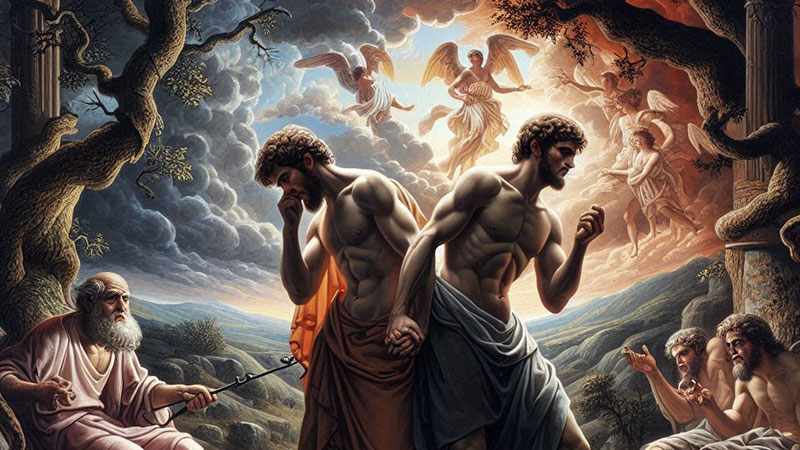
The story of Cain and Abel is one of the most compelling and tragic accounts in the Bible, exploring themes of jealousy, anger, and moral responsibility. It begins with Adam and Eve, the first humans, and their two sons: Cain, a farmer, and Abel, a shepherd. Both offered sacrifices to God; Cain brought the fruits of his labor, while Abel presented the best portions of his flock.
God favored Abel’s offering, sparking deep envy in Cain that ultimately led him to commit the first murder in human history. When confronted by God about Abel’s fate, Cain’s chilling response, “Am I my brother’s keeper?” highlights the tension between personal desire and social responsibility.
This narrative goes beyond a simple tale of rivalry; it serves as a timeless lesson about the consequences of unchecked emotions and the importance of sincere devotion and ethical responsibility.
Cain’s punishment as a restless wanderer and the mark God placed on him reflect both justice and mercy, showing that wrongdoing carries consequences but that accountability and compassion remain central to human life. By exploring this story, readers are invited to reflect on the delicate balance between human emotion, moral choice, and divine guidance.
The Birth of Cain and Abel
Cain and Abel were the first children born to Adam and Eve after they were expelled from the Garden of Eden, making them the first humans born naturally. Cain became a farmer, working the land and growing crops, while Abel became a shepherd, caring for flocks. Their different roles reflect the early human shift toward agriculture and pastoral life, and their relationship as brothers introduces important themes of family bonds, rivalry, and the complexity of human emotions.
The names of Cain and Abel carry deep meaning. “Cain” comes from the Hebrew word Qayin, meaning “acquired” or “possessed,” showing Eve’s gratitude for God’s help and hinting at Cain’s later struggles with control and possession.
“Abel” comes from Hevel, meaning “breath” or “vapor,” symbolizing the fragile and fleeting nature of life. Their births mark the beginning of human generations and highlight the roles, responsibilities, and identities that shape human destiny, setting the stage for the story of jealousy, conflict, and moral lessons that follow.

Cain and Abel’s Occupations
The distinct occupations of Cain and Abel not only shaped their identities but also played a pivotal role in the unfolding of their story. Their roles as farmers and shepherds highlight the early diversification of human labor and the complementary nature of agricultural and pastoral lifestyles.
Cain the Farmer
- Cultivator of the Land:
- Primary Role: Cain was a farmer who worked the soil, growing crops and producing food from the earth. His occupation represented one of the earliest forms of settled human labor.
- Significance: Farming was crucial for the survival and sustenance of early human communities, providing a stable food supply and enabling the development of settled societies.
- Offering to God:
- Sacrifice: Cain brought an offering of the fruits of his labor to God. The nature of his offering, which consisted of produce from the ground, highlights his role as a cultivator.
- Divine Response: God’s response to Cain’s offering, which was not as highly favored as Abel’s, sparked jealousy and anger in Cain. This divine preference played a key role in the tragic events that followed.
- Symbolism:
- Connection to the Earth: Cain’s occupation as a farmer symbolizes humanity’s connection to the earth and the effort required to cultivate and sustain life. It also reflects themes of labor, perseverance, and the challenges of agricultural life.
Abel the Shepherd
- Tending the Flocks:
- Primary Role: Abel was a shepherd who cared for sheep and other livestock. His role involved guiding, feeding, and protecting the animals under his care.
- Significance: Shepherding was an essential occupation in ancient societies, providing meat, wool, and other resources necessary for survival and trade.
- Offering to God:
- Sacrifice: Abel brought an offering of the firstborn of his flock and their fat portions to God. His offering, characterized by its quality and sincerity, was looked upon with favor by God.
- Divine Response: God’s acceptance of Abel’s offering highlights the importance of sincerity and devotion in worship. Abel’s acceptable sacrifice contrasts with Cain’s, underscoring the value of genuine faith.
- Symbolism:
- Caretaker Role: Abel’s role as a shepherd symbolizes care, guidance, and protection. The shepherd’s work is often associated with leadership and responsibility, reflecting themes of stewardship and faithfulness.
- Sacrificial Lamb: The offering of the firstborn of his flock and the subsequent favor from God draw parallels with later religious themes of sacrifice and atonement.

Key Themes:
- Diverse Occupations: The distinct roles of Cain and Abel as farmers and shepherds illustrate the diversification of early human labor, highlighting the complementary nature of agricultural and pastoral lifestyles.
- Divine Preference: The differing responses to their offerings underscore the importance of sincerity and faith in worship, with Abel’s offering deemed more acceptable for its quality and intention.
- Symbolic Roles: Cain and Abel’s occupations carry symbolic meanings related to humanity’s connection to the earth, the challenges of labor, and the themes of care and stewardship.
The Offerings to God
The offerings Cain and Abel bring to God are central to their story, highlighting themes of faith, sincerity, and divine preference. This section delves into the nature of their offerings and God’s reaction, setting the stage for the ensuing conflict.
Cain’s Offering
- Nature of the Offering:
- Product of the Land: Cain, being a farmer, brought an offering of the fruits of his labor. His offering consisted of produce from the ground, representing the work he did as a cultivator.
- Effort and Intention: While the specific quality of Cain’s offering is not detailed, it is suggested that his effort and intention behind the offering might not have been as sincere or wholehearted as Abel’s.
- Symbolism:
- Connection to Labor: Cain’s offering symbolizes humanity’s connection to the earth and the effort required to produce food. It reflects the broader themes of labor, perseverance, and the challenges of agricultural life.
- Contrast with Abel’s Offering: Cain’s offering stands in contrast to Abel’s, highlighting differences in their approaches to worship and devotion.
Read More: How Satan Deceived Eve?
Abel’s Offering
- Nature of the Offering:
- The firstborn of the Flock: Abel, a shepherd, brought an offering of the firstborn of his flock and their fat portions. This offering was characterized by its quality and the care Abel took in selecting the best of his livestock.
- Sincerity and Devotion: Abel’s offering is noted for its sincerity and devotion, reflecting his genuine faith and wholehearted worship of God.
- Symbolism:
- Sacrificial Lamb: Abel’s offering of the firstborn of his flock draws parallels with later religious themes of sacrifice and atonement. It symbolizes the value of giving one’s best to God.
- Faith and Righteousness: The quality and sincerity of Abel’s offering reflect his faith and righteousness, serving as a model for genuine devotion in worship.
God’s Reaction to the Offerings
The story of Cain and Abel serves as a profound meditation on the quality of our intentions, illustrating that divine favor is drawn not to the material value of a gift, but to the sincerity and faith of the giver. While Abel’s offering of his best reflected a heart of true devotion, Cain’s rejection highlights the soul’s vulnerability to jealousy and resentment when its efforts are found wanting.
Ultimately, this narrative warns us of the destructive power of unchecked emotions while revealing a complex divine nature, one that demands moral accountability yet offers a “mark” of mercy even in the wake of tragedy.
The Jealousy of Cain
The story of Cain and Abel takes a dramatic turn with the introduction of jealousy, which ultimately leads to tragedy. This section explores Cain’s emotions and his pivotal conversations with God, highlighting the depth of his internal struggle.

Cain’s Anger and Resentment
Cain became deeply jealous and resentful when God favored Abel’s offering over his own, which made him feel inadequate and rejected. This visible divine preference intensified his bitterness and envy, and because Cain could not manage these emotions, they grew uncontrollably.
His unchecked anger and resentment eventually escalated into violence, leading him to lure Abel into the field and kill him. This tragic act of fratricide became the first murder in human history, demonstrating how powerful and destructive unresolved negative emotions can be.
Conversations with God
In the story of Cain and Abel, God first noticed Cain’s downcast expression and asked him why he was angry, encouraging him to reflect on his feelings. He warned Cain that doing what is right would bring acceptance, but if he gave in to sin, it would lie in wait for him, and he must master it. Later, after Cain killed Abel, God confronted him directly, asking where his brother was.
Cain’s evasive answer, “Am I my brother’s keeper?” showed his attempt to avoid responsibility. God pronounced judgment, declaring that Abel’s blood cried out from the ground, and cursed Cain to be a restless wanderer. Yet, God also showed mercy by placing a mark on Cain to protect him from being killed, demonstrating both justice and compassion.
The Murder of Abel
The murder of Abel by his brother Cain is a tragic and pivotal event in biblical history, illustrating the destructive power of jealousy and unchecked anger. Cain lured Abel into the field under the guise of a friendly invitation, isolating him to carry out a premeditated act of violence.
In a fit of rage, Cain killed Abel, marking the first recorded murder in human history and introducing death and sin into the human experience. This fratricide highlights the dangers of familial jealousy, the loss of innocence, and the profound consequences of moral failure. The story teaches enduring lessons about controlling emotions, taking responsibility for one’s actions, and understanding the delicate balance of justice and mercy in human life.

God’s Punishment for Cain
After Cain killed Abel, God judged him with both punishment and mercy. He cursed Cain to wander restlessly, unable to settle in one place or farm the land, which brought isolation, instability, and constant inner turmoil as a result of his sin. At the same time, God showed mercy by marking Cain with a sign, the exact nature of which remains unknown, to prevent others from killing him in revenge.
This mark showed that, despite his grave wrongdoing, Cain was not entirely forsaken. Together, the curse and the mark teach the moral and spiritual lessons of Cain’s story, highlighting accountability, divine protection, and the lasting consequences of sin.
The Aftermath of Abel’s Death
The death of Abel deeply affected Adam and Eve, bringing them immense grief and sorrow. Losing a child is one of the greatest pains a parent can endure, and this was made even more tragic because Abel was killed by his own brother, Cain. Their suffering was compounded by Cain’s exile, leaving them with a profound sense of loss in their family.
This tragedy likely led Adam and Eve to reflect on the consequences of sin, as the pain in their children’s lives mirrored the effects of their own disobedience. Their experience highlights the lasting impact of sin and the importance of following divine guidance, showing how disobedience can bring serious and far-reaching consequences.

Cain’s Life as a Wanderer
Cain’s life following the death of Abel became a profound journey of justice, mercy, and the birth of civilization. Condemned to a restless existence as a fugitive, he wandered in isolation, carrying the “Mark of Cain” as both a public reminder of his guilt and a divine seal of protection.
Yet, this cycle of wandering eventually led to a significant shift; by settling in the Land of Nod and founding the City of Enoch, Cain transitioned from a lonely exile to the architect of human community. His story reflects a complex legacy where the heavy consequences of sin and internal turmoil coexist with the relentless human drive for progress, as his descendants went on to shape the foundations of art, agriculture, and technology.
Symbolism in the Story of Cain and Abel
- Jealousy as a Destructive Force:
- Cain’s Jealousy: Cain’s intense jealousy of Abel for God’s preference for Abel’s offering symbolizes the corrosive nature of envy. This jealousy festers and ultimately leads to the catastrophic act of murder.
- Symbol of Human Emotion: Jealousy in this context symbolizes a fundamental human emotion that, if unchecked, can drive individuals to commit extreme acts of violence and betrayal.
- Sibling Rivalry:
- Conflict Between Brothers: The rivalry between Cain and Abel reflects a broader theme of sibling conflict that is prevalent in many cultures and narratives. This rivalry can be seen as a microcosm of larger human conflicts and the struggle for favor, approval, and recognition.
- Universal Experience: Sibling rivalry is a universal experience, and the story of Cain and Abel captures this dynamic profoundly and tragically. It highlights the potential for competition and jealousy to escalate into harmful actions.
- Moral Lessons:
- Self-Control and Reflection: The story teaches the importance of self-control and the need to reflect on one’s emotions. Cain’s inability to manage his jealousy and anger serves as a cautionary tale about the consequences of letting negative emotions dominate one’s actions.
- Responsibility Towards Others: Cain’s question, “Am I my brother’s keeper?” emphasizes the moral responsibility individuals have towards their family and community. It underscores the duty to care for and protect one another, rather than allowing envy to lead to harm.

Divine Justice and Mercy
The story of Cain and Abel vividly shows the tension between divine justice and mercy. Cain faces exile and restlessness as a stern warning about moral responsibility and the seriousness of his crime, yet God places a protective “mark” on him, keeping him within divine care.
This combination of judgment and mercy demonstrates that every action has consequences, but God always leaves the door to redemption open. The story reminds us that true justice goes beyond punishment; it preserves the chance for repentance and hope, even amid the destructive effects of jealousy and rivalry.
Cain and Abel in the Bible
Genesis 4:1-16:
Primary Account: The story of Cain and Abel is primarily found in Genesis 4:1-16. This passage details their births, occupations, offerings to God, the murder of Abel, and God’s subsequent punishment of Cain.
Key Themes: This account introduces key themes such as sibling rivalry, the consequences of jealousy, divine justice, and the moral responsibility to care for others.
Symbolic Elements:
- First Murder: The narrative marks the first instance of murder in human history, introducing the concept of sin and its grave consequences.
- Agricultural and Pastoral Imagery: Cain and Abel’s respective roles as farmers and shepherds reflect the agricultural and pastoral contexts of ancient societies, providing a backdrop for their conflict.
Moral and Ethical Lessons:
- Moral Responsibility: Cain’s question, “Am I my brother’s keeper?” and God’s response highlight the ethical duty to look out for one another and the consequences of failing to do so.
- Divine Justice and Mercy: God’s punishment of Cain, coupled with the protective mark, illustrates the balance of justice and mercy in divine judgment.
New Testament Mentions
Hebrews 11:4:
Faith and Righteousness: “By faith, Abel brought God a better offering than Cain did. By faith, he was commended as righteous when God spoke well of his offerings. And by faith, Abel still speaks, even though he is dead.”
Legacy of Faith: This passage highlights Abel’s faith and righteousness, positioning him as a model of true devotion and sincere worship.
1 John 3:12:
Warning Against Evil: “Do not be like Cain, who belonged to the evil one and murdered his brother. And why did he murder him? Because his actions were evil and his brother’s were righteous.”
Moral Contrast: The mention of Cain in this passage serves as a warning against evil actions and highlights the stark contrast between Cain’s jealousy and Abel’s righteousness.
Matthew 23:35:
Innocent Blood: “And so upon you will come all the righteous blood that has been shed on earth, from the blood of righteous Abel to the blood of Zechariah son of Berekiah, whom you murdered between the temple and the altar.”
Martyrdom: Jesus references Abel as an example of righteous bloodshed, positioning him among the martyrs whose innocent blood calls for justice.
Jude 1:11:
Path of Destruction: “Woe to them! They have taken the way of Cain; they have rushed for profit into Balaam’s error; they have been destroyed in Korah’s rebellion.”
Example of Wickedness: Cain is cited as an example of the path of destruction and wickedness, warning against following his example of jealousy and murder.
Interpretations of Cain and Abel’s Story
The story of Cain and Abel has been subject to various interpretations throughout history. This section explores the theological perspectives and literary analysis that offer deeper insights into their narrative.
Christianity
In Christian theology, Cain and Abel’s story shows how sin can destroy and how God offers hope for redemption. Abel offered his gift sincerely and righteously, while Cain acted sinfully, highlighting the importance of faith and moral integrity.
Abel symbolizes innocence and martyrdom, and his unjust death points to the suffering of the righteous and the redemption God brings through Jesus Christ. God responds to Cain with both justice and mercy, reminding us that sin carries serious consequences, but we can always repent, and God continues to guide and protect us.
Judaism
In Jewish interpretations, the story emphasizes moral responsibility, showing that people have an ethical duty to care for one another, as reflected in Cain’s question, “Am I my brother’s keeper?” It also highlights human free will, demonstrating that each person can choose their actions and must face the consequences. Additionally, the story reflects on the nature of proper worship through the contrast between Abel’s accepted sacrifice and Cain’s rejected one, underscoring the importance of offering the best to God.
Islam
In Islamic tradition, the story of Qabil (Cain) and Habil (Abel) marks the first human conflict, showing how envy can lead to violence. It teaches the importance of repentance and highlights that God’s mercy is always available, even for those who commit serious sins. The story also serves as a moral guide, emphasizing ethical behavior, sincere worship, and living righteously in accordance with God’s guidance.

Lessons from the Story of Cain and Abel
The story of Cain and Abel teaches timeless moral and ethical lessons that are highly relevant today. It warns against the dangers of unchecked jealousy and anger, showing how failing to manage these emotions can lead to harm. It emphasizes the importance of taking responsibility for one’s actions and accepting the consequences, highlighting personal accountability and ethical decision-making.
The story also underscores the value of sincerity and genuine effort, as Abel’s wholehearted offering contrasts with Cain’s less sincere one, teaching us to strive for excellence in work, relationships, and personal goals. Additionally, it reminds us of our ethical duty to care for others and maintain strong, supportive communities, promoting harmony, solidarity, and peaceful conflict resolution for a more just and compassionate society.
Comparative Analysis with Other Religious Texts
The story of Cain and Abel, while unique, shares themes with many other cultural and religious narratives worldwide. In Sumerian mythology, the rivalry between Dumuzi, a shepherd god, and Enkimdu, a farmer god, reflects the tension between pastoral and agricultural lifestyles, similar to Cain and Abel’s conflict.
Hindu mythology’s tale of Indra and Vritra emphasizes the consequences of moral failings and the struggle for divine favor, echoing the moral lessons of jealousy and responsibility. Greek mythology’s story of Eteocles and Polynices highlights sibling rivalry and the destructive power of unchecked emotions, while Norse mythology’s account of Baldr and Höðr shows fratricide and the tragic effects of deceit, often influenced by divine intervention.
Across these narratives, common threads include divine favor and jealousy, the moral consequences of one’s actions, and the serious repercussions of sibling conflict, though each story reflects its own cultural context, societal values, and understanding of justice and morality.

Conclusion: The Legacy of Cain and Abel
The story of Cain and Abel remains a timeless masterpiece of human psychology and moral philosophy, transcending its ancient origins to offer profound insights into the roots of jealousy, the weight of accountability, and the universal cry for justice.
By exploring the delicate balance between sincere devotion and destructive emotion, the narrative challenges us to acknowledge our “blood guilt”, the intrinsic responsibility we hold toward one another and the world we inhabit. Ultimately, this legacy serves as a powerful mirror, reflecting the enduring struggle of the human spirit while inspiring a path toward deeper compassion, self-awareness, and a more ethical existence.
FAQ
God looked at the heart and the quality of the gift. Abel offered the “firstborn” and the “best” of his flock with sincere faith, whereas Cain brought a common offering from the ground without the same devotion or excellence.
The mark was a sign of both divine justice and mercy. While Cain was punished with wandering, God placed a mark on him to protect him from being killed by others, showing that even in judgment, God offers a path of protection and accountability.
The primary lesson is the importance of mastering one’s emotions, such as jealousy and anger, before they lead to sin. It also emphasizes our “brotherly responsibility”, the moral duty to care for and protect one another.





Add comment