
 Peidayesh | پیدایش
Have you ever wondered about the origins and significance of circumcision in religious practices? The covenant of circumcision is a fascinating and deeply rooted tradition that holds immense importance in the Abrahamic faiths.
As we delve into the Old Testament, specifically in Genesis 17, we uncover the covenant of circumcision that God established with Abraham and his descendants. This ritual, which may seem unusual to modern sensibilities, carries profound spiritual and symbolic meanings that have shaped religious observances for millennia.
What is the Covenant of Circumcision?
In the Old Testament, the covenant of circumcision is a divine agreement made between God and Abraham. According to Genesis 17:1-14, God commands Abraham to circumcise himself, his household, and all his male descendants as a physical sign of their commitment to Him.
This act of circumcision is not merely a ritualistic procedure; it symbolizes the cutting away of sin and represents the individual’s inclusion in God’s chosen people.
Interesting Facts:
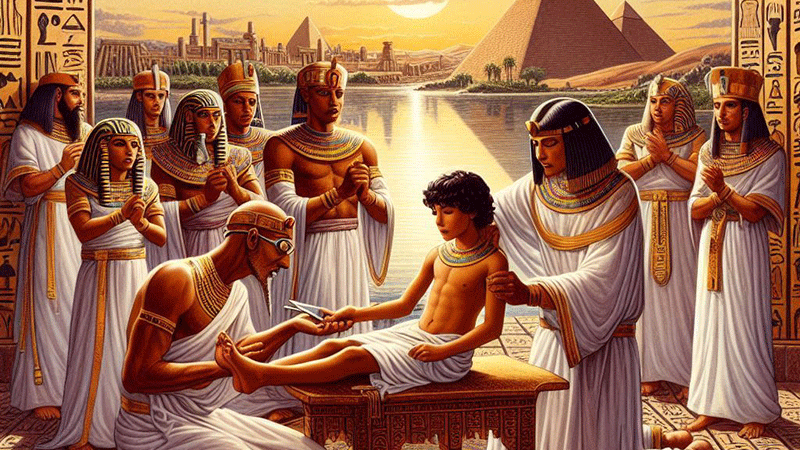
- The practice of circumcision predates the covenant with Abraham and was already prevalent in ancient Egypt and other Near Eastern cultures. However, in the context of the Old Testament, it takes on a distinct and sacred significance.
- The commandment for circumcision was to be observed by all male members of Abraham’s household, including servants and those born into the household. This inclusivity highlights the importance of the covenant in uniting all members of the community under God’s promise.
- Circumcision was to be performed on the eighth day after birth. This specific timing is believed to have both medical and spiritual implications, ensuring the infant’s health and symbolizing a complete week plus one day, representing a new beginning.
Importance of the Covenant in Biblical Context
The covenant of circumcision serves multiple purposes within the biblical narrative. It is both a sign of faithfulness and a mark of identity for the Hebrew people.
By adhering to this covenant, Abraham and his descendants demonstrate their obedience and devotion to God, reaffirming their commitment to live in accordance with His commandments.
- Physical and Spiritual Commitment: The act of circumcision requires a tangible and often painful commitment, reflecting the depth of faith and obedience required. This physical act serves as a constant reminder of the spiritual covenant with God.
- Cultural and Social Impact: Over the centuries, the practice of circumcision has been a point of contention and debate among various cultures and religions. Understanding its origins and significance helps bridge the gap between different perspectives and fosters a deeper appreciation for its role in religious practices.

The covenant of circumcision in the Old Testament is a divine agreement established between God and Abraham, requiring all male members of his household to be circumcised as a sign of their commitment to God.
This practice, rooted in Genesis 17, symbolizes the cutting away of sin and the inclusion of God’s chosen people, highlighting the importance of obedience and faithfulness.
In the following sections, we will explore the historical and theological implications of this covenant, shedding light on its enduring legacy in religious traditions. Stay tuned as we embark on this insightful journey into one of the foundational aspects of Abrahamic faiths.
Genesis 17: The Foundation of the Covenant
Genesis 17 is a pivotal chapter in the Old Testament that lays the foundation for the covenant of circumcision between God and Abraham. This chapter not only marks a significant moment in the relationship between God and Abraham but also establishes a key practice that would be central to the identity and faith of Abraham’s descendants.
- God’s Revelation to Abraham: In Genesis 17, God appears to Abraham and reaffirms His promise to make Abraham the father of many nations. This divine revelation is a turning point in Abraham’s spiritual journey and underscores the depth of God’s commitment to His covenant with Abraham.
- The Name Change: As part of this covenant, God changes Abram’s name to Abraham, meaning “father of many nations.” Similarly, Sarai’s name is changed to Sarah, meaning “princess,” symbolizing her role in the fulfillment of God’s promises. These name changes signify a transformation and a new identity aligned with God’s divine plan.
- The Promise of Isaac: God promises Abraham that his wife Sarah will bear a son, Isaac, through whom the covenant will continue. This promise is a testament to God’s power and faithfulness, as Sarah was beyond the age of childbearing.
Key Verses and Their Significance
Genesis 17:1-14 contains several key verses that highlight the significance of the covenant of circumcision and its implications for Abraham and his descendants.
Genesis 17:1-2: “When Abram was ninety-nine years old, the Lord appeared to him and said, ‘I am God Almighty; walk before me faithfully and be blameless. Then I will make my covenant between you and will greatly increase your numbers.'”
- Significance: This verse sets the stage for the covenant by emphasizing the need for faithfulness and blamelessness in Abraham’s relationship with God. It underscores the conditional nature of God’s promises, which require a commitment to righteousness.
Genesis 17:10-11: “This is my covenant with you and your descendants after you, the covenant you are to keep: Every male among you shall be circumcised. You are to undergo circumcision, and it will be the sign of the covenant between me and you.”
- Significance: These verses explicitly outline the requirement of circumcision as a physical sign of the covenant. It establishes circumcision as an enduring practice that signifies the individual’s inclusion in God’s chosen people and their commitment to the covenant.
Genesis 17:12: “For the generations to come, every male among you who is eight days old must be circumcised, including those born in your household or bought with money from a foreigner, those who are not your offspring.”
- Significance: This verse highlights the inclusivity of the covenant, extending its requirement to all male members of Abraham’s household, regardless of their lineage. It reinforces the idea that the covenant is a communal commitment that unites all members of the community under God’s promise.
Genesis 17:19: “Then God said, ‘Yes, but your wife Sarah will bear you a son, and you will call him Isaac. I will establish my covenant with him as an everlasting covenant for his descendants after him.'”
- Significance: This verse reaffirms the specific promise of Isaac and his role in the continuation of the covenant. It highlights the generational aspect of God’s promises, ensuring that the covenant will endure through Abraham’s descendants.
By examining these key verses, we gain a deeper understanding of the covenant of circumcision’s significance and the foundational role it plays in the relationship between God and Abraham.
This covenant is not just a historical practice but a profound expression of faith, commitment, and identity for Abraham’s descendants. In the following sections, we will explore further implications and the enduring legacy of this covenant in religious traditions.

The Role of Abraham in the Covenant of Circumcision
Abraham’s role in the covenant of circumcision is a testament to his unwavering faith and obedience to God’s commands. His actions set a profound example for his descendants and established a lasting legacy of commitment and faithfulness.
- Unwavering Faith: Abraham’s willingness to follow God’s command to circumcise himself, his household, and his descendants demonstrates his deep trust in God’s promises. Despite the physical and social challenges, Abraham chose to obey, reflecting his strong belief in God’s covenant.
- Obedience to God’s Command: When God appeared to Abraham and instructed him to perform circumcision as a sign of the covenant, Abraham did not hesitate. He faithfully carried out God’s instructions, circumcising himself, his son Ishmael, and all the male members of his household on the same day (Genesis 17:23-27). This immediate obedience underscores Abraham’s dedication to fulfilling God’s will.
- Symbol of Commitment: The act of circumcision served as a tangible and perpetual sign of Abraham’s commitment to God. It was not just a physical procedure but a symbolic act that represented the cutting away of sin and the individual’s inclusion in God’s chosen people. Abraham’s compliance with this commandment set a precedent for future generations.
By exemplifying faith and obedience, Abraham’s actions reinforced the importance of adhering to God’s commands and trusting in His promises, even when faced with difficult and seemingly insurmountable challenges.
God’s Promises to Abraham
The covenant between God and Abraham established a foundational legacy built on four transformative promises: an innumerable lineage, the inheritance of Canaan, a universal blessing for all nations, and a unique, personal relationship with the Divine. By promising that Abraham’s descendants would be as vast as the stars, God provided a sense of enduring purpose and identity.
This was reinforced by the gift of a physical homeland and the profound declaration that through Abraham’s faithfulness, the entire world would find blessing, marking him as a pivotal figure in human history.
These divine assurances did more than just offer future rewards; they forged a spiritual framework that continues to define the Hebrew faith and modern religious traditions. The covenant, symbolized by circumcision, represents a mutual commitment where God pledged His ongoing presence and the people pledged their devotion.
This historical turning point remains a powerful testament to the impact of faith and obedience, serving as the bedrock for the spiritual journey of countless generations and the development of monotheistic identity.

The Significance of Circumcision in the Old Testament
Circumcision in the Old Testament carries deep symbolic meanings that extend beyond the physical act. It serves as a powerful symbol of the covenant between God and Abraham’s descendants and represents several key aspects of their relationship with God.
- Sign of the Covenant: Circumcision is a physical mark that signifies the individual’s inclusion in the covenant community. It acts as a visible reminder of the promises made by God to Abraham and his descendants.
- Symbol of Purity: The act of circumcision symbolizes the cutting away of impurity and sin. It signifies a commitment to live a life set apart for God, adhering to His commandments and striving for spiritual purity.
- Identity and Belonging: Circumcision is a marker of identity, distinguishing the Hebrew people as God’s chosen ones. It reinforces their unique status and the special relationship they have with God.
- Obedience and Faith: By undergoing circumcision, individuals demonstrate their obedience to God’s command. It is an outward expression of their inner faith and trust in God’s promises.
These symbolic meanings highlight the multifaceted significance of circumcision in the Old Testament, emphasizing its role as both a physical and spiritual act.
Spiritual Implications
Beyond its symbolic meanings, circumcision in the Old Testament also carries profound spiritual implications for Abraham’s descendants. It serves as a foundation for their spiritual identity and relationship with God.
- Covenant Relationship: Circumcision establishes a covenant relationship with God, wherein He promises to be their God, and they promise to be His people. This relationship is based on mutual commitment and faithfulness.
- Holiness and Sanctification: The practice of circumcision is closely tied to the concept of holiness. It signifies the individual’s dedication to living a holy life, set apart for God’s purposes. It is a call to sanctification and moral integrity.
- Generational Continuity: Circumcision is a sign of the perpetual covenant between God and Abraham’s descendants. It ensures the continuity of the covenant across generations, reinforcing the enduring nature of God’s promises.
- Spiritual Renewal: The act of circumcision serves as a reminder of the need for ongoing spiritual renewal and transformation. It calls on individuals to continually cut away sin from their lives and renew their commitment to God’s ways.
These spiritual implications underscore the depth and significance of circumcision in the Old Testament, highlighting its role as a central element in the faith and identity of Abraham’s descendants.
By understanding these aspects, we gain a fuller appreciation of the covenant of circumcision and its lasting impact on religious traditions. In the following sections, we will further explore the enduring legacy of this covenant and its relevance in contemporary faith practices.
How Circumcision was Performed
Circumcision, as described in the Old Testament, was a significant ritual that carried deep religious and cultural meanings. The procedure itself, while relatively straightforward, was carried out with great care and reverence.
- The Procedure: Circumcision involves the removal of the foreskin from the male genitalia. This act was performed using a sharp instrument, often a flint knife in ancient times. The cut was made to the foreskin, which was then removed, exposing the glans of the penis.
- Participants: The procedure was conducted on all male members of Abraham’s household, including his descendants and servants. It was a communal act that involved not only family members but also those who were part of the household or community.
- Ritual Context: Circumcision was performed in a religious context, often accompanied by prayers and blessings. It was a solemn ceremony that emphasized the importance of the covenant with God.
- Health and Hygiene: Although primarily a religious ritual, circumcision also had health and hygiene benefits. The removal of the foreskin was believed to reduce the risk of infections and improve cleanliness.

This procedure, though physically challenging, was a profound expression of faith and commitment to God’s covenant.
The Eighth Day Requirement
The command for circumcision on the eighth day, first established in Genesis 17:12, serves as a profound intersection of divine decree and symbolic meaning. In biblical numerology, while the number seven denotes the completion of the natural week, the eighth day represents a “new beginning” or a new creation, marking the infant’s formal entry into a sacred covenant with God.
This specific timing ensured cultural continuity among Abraham’s descendants, transforming a physical procedure into a unifying rite of passage that blended spiritual obedience with a distinct communal identity.
Beyond its theological weight, the eighth-day requirement reflects a remarkable alignment with practical biological wisdom. Modern medical insights suggest that an infant’s blood-clotting capabilities, specifically the levels of Vitamin K, naturally peak around the eighth day of life, minimizing surgical risks.
This harmony between ancient religious law and physiological safety underscores the thoughtfulness of the commandment, illustrating how the covenant integrated faith into the very fabric of daily life and physical well-being.
The Covenant’s Requirements for Abraham’s Descendants
The covenant of circumcision, as established in the Old Testament, explicitly required the inclusion of all male members of Abraham’s household. This inclusion was comprehensive and extended beyond immediate family to encompass a wider community.
- All Male Descendants: The covenant mandated that every male descendant of Abraham was to be circumcised. This requirement ensured that each generation maintained the physical sign of the covenant, reinforcing their identity as God’s chosen people.
- Servants and Slaves: The inclusion extended to all male servants and slaves within Abraham’s household, whether born into the household or acquired through purchase (Genesis 17:12-13). This provision highlighted the covenant’s reach beyond just biological lineage, encompassing all who were part of the household.
- Newborns: The requirement of circumcision on the eighth day after birth applied to all male infants, establishing a lifelong mark of the covenant from the earliest stage of life. This early inclusion underscored the significance of the covenant as a foundational aspect of their identity and relationship with God.
By encompassing all male members, the covenant ensured that the entire household was unified in their commitment to God, fostering a collective sense of belonging and spiritual purpose.

Impact on Abraham’s Household
The covenant of circumcision had profound implications for Abraham’s household, both in terms of their daily lives and their spiritual identity.
- Unified Community: The shared practice of circumcision created a sense of unity and solidarity within the household. It established a common identity and reinforced their collective commitment to the covenant with God.
- Spiritual Commitment: Circumcision served as a constant reminder of the household’s spiritual obligations. It was a tangible symbol of their dedication to living according to God’s commandments and maintaining a holy and righteous life.
- Social and Cultural Identity: As a distinct practice that set them apart from surrounding cultures, circumcision helped define the cultural and social identity of Abraham’s descendants. It distinguished them as a people dedicated to God and His promises.
- Intergenerational Faith: The covenant ensured that the practice of circumcision was passed down through generations, fostering a sense of continuity and faithfulness. Each generation was reminded of their forefather Abraham’s faith and obedience, encouraging them to uphold the same commitment.
- Inclusivity and Responsibility: The inclusion of servants and slaves in the covenant highlighted the responsibility of the household leaders to care for and integrate all members of the community. It emphasized that the covenant was not just an individual commitment but a communal one, where every member had a role to play in upholding their faith.
The covenant of circumcision had a lasting impact on the household of Abraham, shaping their spiritual identity, social structure, and communal life.
By understanding these requirements and their implications, we gain a deeper appreciation for the profound significance of the covenant in the lives of Abraham’s descendants. In the following sections, we will continue to explore the lasting legacy of this covenant and its relevance in contemporary faith practices.
Theological Interpretations of the Covenant
The covenant of circumcision has been interpreted in various ways across different theological perspectives, each offering unique insights into its significance and implications.
Judaism
In Jewish theology, circumcision is viewed as an essential and sacred rite that signifies the covenant between God and the Jewish people. It is a commandment (mitzvah) that must be fulfilled by every Jewish male, symbolizing their commitment to the Torah and God’s laws. Circumcision is seen as a physical and spiritual bond with God, and it plays a central role in Jewish identity and religious practice.
Christianity
Christian interpretations of circumcision vary among different denominations. Some view it as an Old Testament practice that was fulfilled and transcended by the coming of Jesus Christ.
In the New Testament, the Apostle Paul emphasizes that faith in Christ, rather than physical circumcision, is what establishes one’s covenant relationship with God (Galatians 5:6). Thus, for many Christians, circumcision is not required for salvation or religious identity.
Islam
While circumcision (khitan) is not explicitly mentioned in the Quran, it is a practice that is widely observed among Muslims. Islamic tradition considers circumcision to be an important act of cleanliness and purification, aligning with the broader emphasis on physical and spiritual purity. It is viewed as following the example of Prophet Abraham (Ibrahim) and is an important rite of passage for Muslim boys.
Secular and Cultural Perspectives
Beyond religious contexts, circumcision is also practiced for cultural, health, and social reasons. Some see it as a tradition that fosters a sense of community and continuity, while others advocate for its health benefits, such as reduced risks of certain infections and diseases.
These diverse theological interpretations highlight the rich and multifaceted nature of the covenant of circumcision and its enduring significance across various faiths and cultures.

The Covenant in Jewish Tradition
The Brit Milah, or the covenant of circumcision, stands as a cornerstone of Jewish identity, representing an eternal physical bond between God and the descendants of Abraham. Performed on the eighth day of a male infant’s life by a trained professional known as a mohel, the ritual is far more than a medical procedure; it is a sacred communal event.
During the ceremony, the child receives his Hebrew name, officially welcoming him into the Jewish community and marking his entry into a lineage of faith that has remained unbroken for thousands of years.
Beyond its historical continuity, the Brit Milah serves as a profound symbol of spiritual dedication and commitment to the commandments of the Torah. While modern communities sometimes adapt the ceremony to include contemporary educational elements or enhanced medical oversight, the core theological significance remains unchanged.
It acts as a bridge between generations, connecting the individual to their ancestors and reaffirming the enduring relationship between the Jewish people and the Divine through a powerful, visible sign of faith.
The Covenant’s Role in the Identity of God’s Chosen People
The covenant of circumcision is more than just a physical act; it serves as a critical mark of identity for God’s chosen people. This covenantal sign has profound implications for the communal and spiritual life of Abraham’s descendants.
- Symbol of Belonging: Circumcision is a tangible symbol that signifies membership within the covenant community. It marks the individual as part of a group that is set apart by God for His purposes.
- Covenantal Identity: By adhering to the practice of circumcision, the community continuously reaffirms its unique covenantal relationship with God. It serves as a perpetual reminder of their collective history and divine calling.
- Cultural Distinction: The practice sets the Hebrew people apart from surrounding nations, reinforcing their distinct cultural and religious identity. It highlights their commitment to God’s laws and distinguishes them as a people dedicated to living according to His commandments.
- Communal Unity: The shared observance of circumcision fosters a sense of unity and solidarity within the community. It connects individuals across generations, creating a continuous link to their forefather Abraham and the covenant promises made by God.
Through circumcision, the covenant community embraces a shared identity that is deeply rooted in their relationship with God and their collective heritage.

Inclusion and Exclusion
The covenant of circumcision serves as a foundational marker of identity that defines the boundaries of the community through a balance of inclusion and strict requirements. By extending the rite to all males within the household, regardless of biological lineage, and ensuring generational continuity through infant circumcision, the practice fosters a broad yet cohesive communal bond.
However, it also establishes clear parameters for exclusion, as the failure to observe this sign results in being “cut off” from the people. Ultimately, the ritual transcends a mere physical act, representing a profound spiritual commitment and a visible framework for belonging to God’s chosen people.
Historical Context of Circumcision Practices
Circumcision is not an exclusively Abrahamic tradition but one that has been practiced in various forms across the Ancient Near East long before it was codified in the Old Testament.
- Egyptian Influence: Evidence suggests that circumcision was practiced in ancient Egypt as early as 2400 BCE. Egyptian wall carvings and mummies provide historical proof of the practice. It was often associated with rites of passage, priesthood, and preparation for marriage.
- Mesopotamia: In Mesopotamian societies, circumcision was less prevalent but still present among certain groups. It often had a similar symbolic meaning related to maturity and social status.
- Canaanite Practices: The Canaanites, who lived in the land that would later become Israel, also practiced circumcision. This local tradition likely influenced the Hebrew practice and its incorporation into religious rites.
- Ritual Purification: In many ancient cultures, circumcision was seen as a form of ritual purification, a physical mark of spiritual cleanliness and readiness for divine service.
These practices indicate that circumcision had broad cultural significance in the Ancient Near East, serving various social, religious, and hygienic purposes.
Comparison with Other Cultures
The practice of circumcision is not unique to the Ancient Near East but has been observed in various forms across different cultures and periods.
African Tribes
Many African tribes, such as the Xhosa and Maasai, have practiced circumcision for centuries as part of their initiation rites. These rites mark the transition from boyhood to manhood and are accompanied by elaborate ceremonies.
Australian Aboriginals
Among some Australian Aboriginal groups, circumcision is part of a complex system of rites of passage that signify a boy’s entrance into adulthood and his ability to take on societal responsibilities.
Polynesian Cultures
In Polynesian cultures, circumcision was also practiced and often related to preparation for marriage and sexual purity. The procedure was usually performed during adolescence.
Islamic Tradition
In Islam, circumcision is widely practiced as part of the Sunnah (the traditions of the Prophet Muhammad). It is seen as an act of religious duty and cleanliness and is usually performed on boys between infancy and puberty.
Western Medical Practice
In the modern Western context, circumcision is often performed for medical reasons, such as hygiene and prevention of certain diseases. This practice has generated diverse opinions and debates over its necessity and ethical considerations.
By comparing circumcision practices across various cultures, we gain a broader understanding of its multifaceted significance. In each context, circumcision carries unique meanings, whether as a rite of passage, a marker of religious identity, or a practice of health and hygiene.
In conclusion, the historical context of circumcision practices reveals a rich tapestry of cultural, religious, and social meanings. From the ancient rituals of Egypt and Mesopotamia to contemporary practices across the globe, circumcision has served as a powerful symbol of identity, purification, and commitment.

By examining these diverse practices, we appreciate the deep and enduring significance of circumcision within both historical and modern contexts.
The Covenant of Circumcision in the New Testament
The New Testament presents a nuanced view of the covenant of circumcision, reflecting its theological evolution within early Christianity. Several references highlight the ongoing significance of circumcision while also introducing new interpretations.
Acts 15:1-2: The Council of Jerusalem addresses the question of whether Gentile converts to Christianity must be circumcised according to the custom of Moses. This pivotal meeting underscores the transition from physical circumcision to a broader understanding of faith and salvation.
Romans 2:28-29: The Apostle Paul states, “A person is not a Jew who is one only outwardly, nor is circumcision merely outward and physical. No, a person is a Jew who is one inwardly; and circumcision is circumcision of the heart, by the Spirit, not by the written code.” This verse emphasizes the spiritual significance of circumcision over the physical act.
Galatians 5:6: Paul writes, “For in Christ Jesus neither circumcision nor uncircumcision has any value. The only thing that counts is faith expressing itself through love.” This highlights the shift from physical rituals to the primacy of faith in Christ.
Colossians 2:11: Paul explains, “In him, you were also circumcised with a circumcision not performed by human hands. Your whole self ruled by the flesh was put off when you were circumcised by Christ.” This verse reflects the idea of spiritual circumcision, aligning with the transformative experience of faith in Jesus.
These references illustrate how early Christian theology reinterpreted circumcision, emphasizing the inner transformation and faith rather than the physical act.
Jesus and Circumcision
Jesus’ own life and actions provide an important context for understanding the covenant of circumcision in the New Testament.
Jesus’ Circumcision: According to Luke 2:21, Jesus was circumcised on the eighth day, by Jewish law. This act affirmed his Jewish identity and his adherence to the Mosaic Law. It also symbolizes his participation in the covenant community from birth.
Fulfillment of the Law: Jesus’ circumcision underscores his role in fulfilling the Law. Matthew 5:17 quotes Jesus saying, “Do not think that I have come to abolish the Law or the Prophets; I have not come to abolish them but to fulfill them.” His circumcision is part of this fulfillment, showing his obedience to the Law.
Teachings on the Spirit of the Law: Throughout his ministry, Jesus emphasized the spirit rather than the letter of the Law. For instance, in Matthew 23:23, he criticizes the Pharisees for focusing on minor ritual details while neglecting justice, mercy, and faithfulness. This perspective aligns with the New Testament shift towards a spiritual understanding of covenant and obedience.
New Covenant: Jesus introduces the concept of the New Covenant during the Last Supper (Luke 22:20), which is established through his sacrificial death and resurrection. This New Covenant focuses on internal transformation and a direct relationship with God, moving beyond the external ritual of circumcision.
In summary, the New Testament references to circumcision and the actions of Jesus reflect a theological evolution that prioritizes inner faith and spiritual transformation over physical rituals.

While acknowledging the importance of the covenant of circumcision within the Jewish tradition, early Christian thought reinterpreted its significance in light of the new relationship with God through Jesus Christ. This shift underscores the continuity and transformation of covenantal themes within the broader narrative of the Bible.
Modern Perspectives on the Covenant of Circumcision
In contemporary Jewish communities, the covenant of circumcision remains a vital and respected tradition, reflecting thousands of years of religious and cultural continuity. However, practices and perspectives have evolved to align with modern values and medical considerations.
- Brit Milah Ceremony: The Brit Milah, or circumcision ceremony, is typically performed on the eighth day after birth, continuing the biblical mandate. It is conducted by a trained mohel and is often accompanied by family and community gatherings, prayers, and blessings.
- Inclusivity and Adaptations: Some modern Jewish communities have introduced more inclusive practices, such as holding naming ceremonies for girls or incorporating egalitarian elements into the Brit Milah ceremony. These adaptations reflect a broader commitment to gender equality and inclusiveness.
- Medical Considerations: In some cases, medical professionals are involved in the procedure to ensure the health and safety of the infant. This collaboration highlights the integration of religious tradition with contemporary medical standards.
- Cultural Significance: For many Jewish families, circumcision remains a significant cultural and spiritual milestone. It is seen as a way to connect with their heritage, uphold family traditions, and reaffirm their commitment to the Jewish faith.
Contemporary Jewish practices surrounding circumcision demonstrate the enduring significance of this ritual while also embracing modern values and medical advancements.
Views in Christianity
Christian perspectives on the covenant of circumcision have evolved significantly, with diverse views emerging across different denominations and theological interpretations.
New Testament Teachings
As discussed earlier, the New Testament, particularly through the teachings of the Apostle Paul, emphasizes faith in Christ over the physical act of circumcision. Many Christians view baptism as the New Covenant equivalent, symbolizing spiritual rebirth and inclusion in the Christian community.
Denominational Differences:
- Catholicism and Orthodoxy: In the Catholic and Eastern Orthodox traditions, circumcision is not a religious requirement. Baptism is the primary sacrament of initiation, and circumcision is viewed as part of the Old Covenant, fulfilled and transcended by Christ.
- Protestantism: Protestant denominations generally do not require circumcision for religious reasons. However, views on the practice may vary, with some denominations emphasizing its symbolic significance in Old Testament teachings.
- Messianic Judaism: Some Messianic Jewish communities, which blend Jewish traditions with belief in Jesus as the Messiah, may continue the practice of circumcision as a sign of the Abrahamic covenant while also embracing Christian theology.

Medical and Cultural Factors
Modern perspectives on the covenant of circumcision reflect a dynamic interplay between ancient tradition and contemporary values across different faiths. While the practice remains a foundational rite of passage in Jewish identity, Christian interpretations vary significantly, often prioritizing spiritual renewal through baptism over physical ritual.
In many predominantly Christian cultures, the decision is shaped by a mix of medical hygiene, personal choice, and cultural norms rather than strict theological mandate. Ultimately, the diversity of these views highlights how different communities adapt historical religious symbols to fit modern ethical, health, and spiritual frameworks.
The Covenant’s Influence on Later Religious Practices (Impact on Christian Baptism)
The covenant of circumcision has had a profound influence on later religious practices, particularly within Christianity, where it has shaped the understanding and practice of baptism.
- Spiritual Parallel: In the New Testament, the Apostle Paul draws a parallel between circumcision and baptism, emphasizing the spiritual significance of both rites. Just as circumcision was a physical sign of the Old Covenant, baptism is viewed as a spiritual sign of the New Covenant in Christ (Colossians 2:11-12).
- Initiation and Inclusion: Both circumcision and baptism serve as rites of initiation into a religious community. For Christians, baptism signifies entry into the Christian faith, marking the individual’s inclusion in the body of Christ and the community of believers.
- Symbol of Renewal: Baptism represents the washing away of sin and the spiritual renewal of the individual. This mirrors the symbolic meaning of circumcision as the cutting away of sin and the commitment to a holy life.
- Covenantal Relationship: Baptism, like circumcision, establishes a covenantal relationship between the individual and God. It signifies the individual’s pledge to follow Christ and live according to His teachings, reflecting a commitment to the New Covenant.
- Infant Baptism: The practice of infant baptism in many Christian denominations can be seen as analogous to the circumcision of male infants on the eighth day. Both practices underscore the importance of initiating the next generation into the faith community from an early age.

By examining the impact of the covenant of circumcision on Christian baptism, we see how this ancient practice has shaped and informed the understanding of spiritual initiation and commitment within Christianity.
Other Religious Rituals
Beyond its influence on Christian baptism, the covenant of circumcision has also impacted other religious rituals and practices across various faiths.
- Judaism: As previously discussed, the Brit Milah remains a central and enduring ritual in Judaism. It continues to be a profound expression of faith, identity, and covenantal commitment for Jewish families and communities.
- Islam: Circumcision (khitan) is an important practice in Islam, symbolizing cleanliness, purity, and adherence to the traditions of Prophet Abraham (Ibrahim). It is typically performed on boys and is considered an essential rite of passage, reinforcing the individual’s connection to the Muslim community.
- African and Indigenous Practices: In many African and Indigenous cultures, circumcision is integrated into complex rites of passage that signify the transition from childhood to adulthood. These rituals often include ceremonies, teachings, and communal gatherings that emphasize the individual’s new status and responsibilities.
- Health and Hygiene: In contemporary contexts, circumcision is also performed for health and hygiene reasons. Medical studies have highlighted benefits such as reduced risk of certain infections and diseases, influencing the practice in various cultural and medical settings.
Challenges and Controversies Surrounding Circumcision
Ethical and Medical Debates: Circumcision has been the subject of significant ethical and medical debates, with various arguments presented both in favor of and against the practice.
Health Benefits
- Reduced Risk of Infections: Proponents argue that circumcision can reduce the risk of urinary tract infections in infants and lower the likelihood of contracting sexually transmitted infections, including HIV.
- Prevention of Certain Conditions: Circumcision may help prevent conditions such as phimosis (tight foreskin), paraphimosis, and balanitis (inflammation of the glans).
Medical Risks
- Surgical Complications: Opponents point out that circumcision, like any surgical procedure, carries risks such as bleeding, infection, and adverse reactions to anesthesia.
- Loss of Sensation: Some studies suggest that circumcision can result in a reduction of penile sensitivity, which raises concerns about potential impacts on sexual pleasure.
Ethical Considerations
- Infant Consent: A major ethical issue is the inability of infants to consent to the procedure. Critics argue that circumcision should be a decision made by the individual when they are old enough to provide informed consent.
- Body Integrity: The principle of bodily autonomy is central to the debate, with opponents advocating for the preservation of the natural body and the right to make personal decisions about one’s own body.
Cultural and Religious Significance
- Preservation of Tradition: For many, circumcision is an important cultural and religious practice that reinforces identity, continuity, and community belonging.
- Balancing Tradition with Modern Ethics: The challenge lies in respecting cultural and religious traditions while addressing modern ethical standards and medical considerations.
These debates reflect the complexity of the issue, encompassing medical, ethical, cultural, and religious dimensions that must be carefully considered.

Religious and Cultural Conflicts
The practice of circumcision remains a deeply complex issue in multicultural societies, often acting as a flashpoint where religious freedom and cultural heritage intersect with legal regulations and human rights advocacy.
While it is a foundational ritual for many Jewish and Muslim communities, tensions arise from international debates over bodily integrity, varying interfaith perspectives, and the challenges immigrant populations face when integrating into secular or different cultural environments.
Ultimately, navigating these multifaceted conflicts requires a delicate balance between respecting long-standing traditions and upholding modern ethical standards, necessitating a respectful, nuanced dialogue to protect both individual rights and communal identities.
Conclusion
The covenant of circumcision represents a profound intersection of physical identity and spiritual devotion, evolving from a foundational mandate in Genesis into a powerful metaphor for the “circumcision of the heart” across various faith traditions.
While its origins are rooted in the specific historical and legal framework of the Old Testament, its enduring legacy lies in its ability to symbolize a deeper, universal commitment to purity, communal belonging, and a transformative relationship with the divine.
Ultimately, navigating the modern ethical and medical complexities of this practice requires a delicate balance, honoring the ancient wisdom of the covenant while ensuring that its spiritual essence of renewal and faith continues to resonate in an evolving world.
FAQ
Spiritually, the number eight symbolizes a “new beginning” or new creation beyond the seven days of the week. Scientifically, it is the day when an infant’s blood-clotting factors (like Vitamin K) naturally peak, making it the safest time for the procedure.
The sign was circumcision, a physical mark on the body. Its significance was to serve as a permanent reminder of the eternal bond between God and Abraham’s descendants, setting them apart from other nations as God’s holy people.
In the Old Testament, the focus was on the physical act and outward obedience to the Law. In the New Testament, the focus shifts to “circumcision of the heart,” which is an inward spiritual change and the removal of sin through the Holy Spirit.
No. Based on the Council of Jerusalem (Acts 15) and the writings of Paul, physical circumcision is not required for salvation. In the New Covenant, what matters is faith working through love and a transformed life in Jesus Christ.







Add comment